A front desk with fingerprints on the glass, a break room sink left over from yesterday’s lunch rush, and dusty vents above busy workstations can change how people feel about an office before the workday even begins. This Central Valley office cleaning guide is designed for local business owners and office managers who want a workplace that feels cared for, stays healthier, and supports employees without creating another task to manage.
A clean office is not about making every surface look untouched. It is about creating a dependable standard: restrooms are fresh, shared areas are sanitary, floors are presentable, and the space reflects the professionalism of the people working there. The best plan is one your team can maintain consistently, with deeper attention scheduled before buildup becomes a problem.
Start With How Your Office Is Actually Used
The right cleaning routine depends on foot traffic, the type of work performed, the number of employees, and how clients use the space. A small professional office with mostly desk-based work will have different needs than a medical-adjacent office, real estate lobby, salon workspace, or shop with employees coming in from outdoor job sites.
Walk through the office at the end of a typical busy day. Notice where dust collects, which trash bins fill first, whether restroom supplies run low, and which areas show fingerprints or crumbs. This inspection gives you a practical picture of what needs daily attention and what can be handled weekly or monthly.
High-touch areas deserve special focus. Door handles, light switches, shared keyboards, reception counters, appliance handles, faucet controls, and restroom fixtures are used repeatedly throughout the day. Cleaning these surfaces regularly helps reduce the spread of everyday germs while keeping the office looking attended to.
Build a Cleaning Schedule That Fits the Workday
A reliable office cleaning plan has layers. Daily upkeep handles visible messes and sanitation needs. Weekly cleaning restores the overall appearance of the space. Periodic deep cleaning reaches the areas that are easy to overlook during regular service.
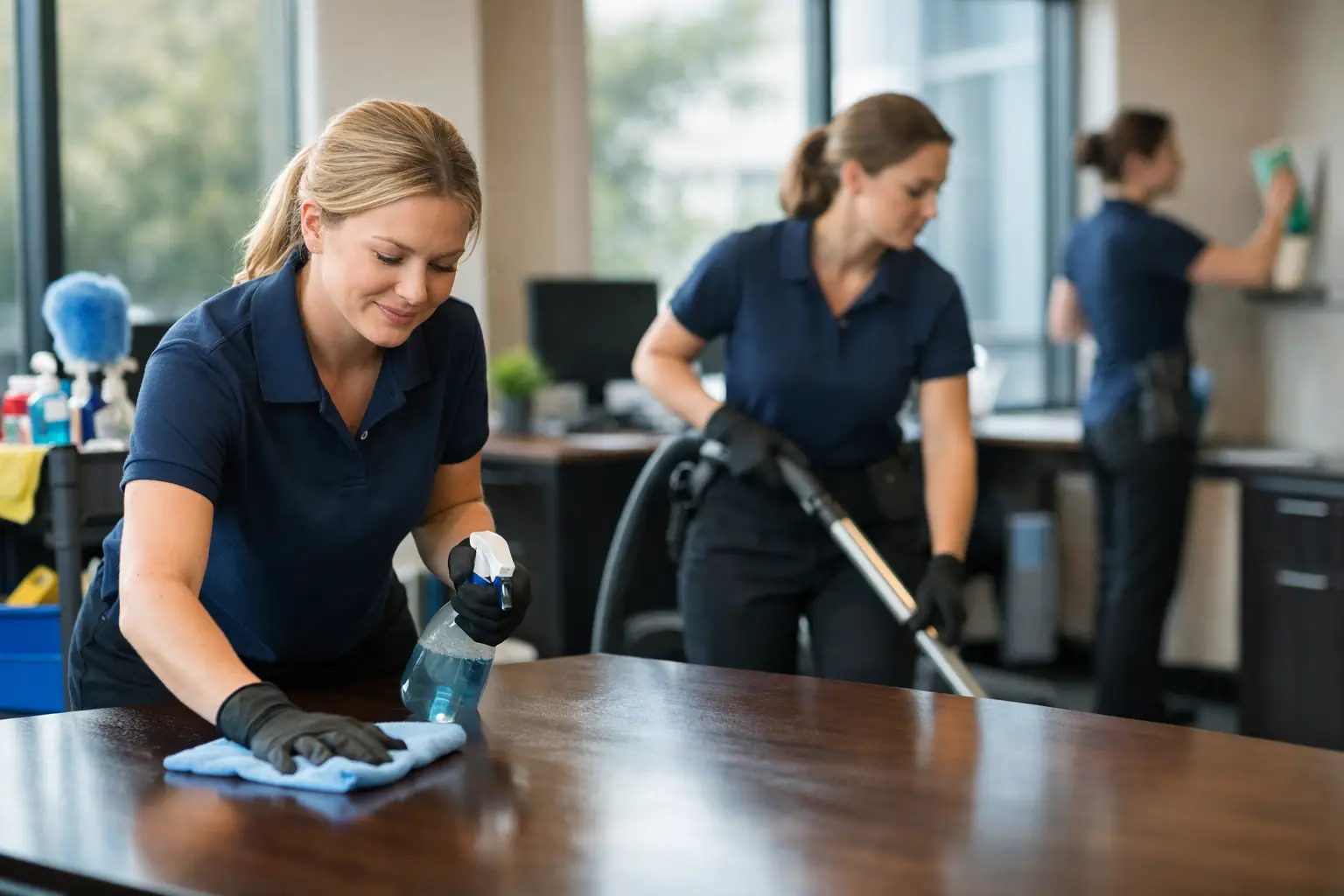
For most offices, daily attention should include emptying trash, wiping and disinfecting high-touch points, cleaning restrooms, tidying break room surfaces, and spot-cleaning entrances or floors as needed. If clients visit frequently, the reception area and front glass may need a quick refresh more than once a day.
Weekly tasks usually include vacuuming carpets, mopping hard floors, dusting desks and accessible surfaces, cleaning mirrors, wiping baseboards where needed, and giving the break room a more complete clean. Refrigerators, microwaves, and coffee areas should also be checked before spills and food residue become stubborn buildup.
Monthly or seasonal cleaning is where offices often fall behind. This is the time for detailed baseboard cleaning, interior window cleaning, vent dusting, upholstery care, detailed restroom work, and cleaning behind or beneath furniture when accessible. A professional team can help make sure these tasks are scheduled at sensible intervals instead of being left until the office feels overdue for a reset.
Plan Around Central Valley Conditions
Central Valley offices can deal with dry dust, seasonal allergens, and debris tracked in during hot, busy months. Buildings near active roads, agricultural areas, construction zones, or parking lots may need more frequent entryway and window attention. During rainy periods, floors near entrances may require extra care to keep them clean, safe, and presentable.
It helps to place durable entry mats both outside and inside the main door, then have them vacuumed or shaken out consistently. This simple step reduces the amount of dirt carried into hallways, reception areas, and carpeted offices. It also protects flooring from premature wear.
Give Restrooms and Break Rooms a Higher Standard
Employees and visitors notice restrooms and break rooms quickly. These shared spaces can also become the source of odors, residue, and germ concerns when cleaning is inconsistent. A quick visual tidy is not enough when fixtures, handles, floors, and waste areas need regular sanitation.
Restrooms should be cleaned with attention to toilets, sinks, faucets, dispensers, mirrors, stall doors, floor edges, and trash receptacles. Supplies should be checked at the same time. A restroom that is technically clean but missing soap or paper products still creates a poor experience for staff and guests.
In break rooms, focus on the areas people touch and the spills they leave behind: counters, tables, chairs, sink basins, cabinet handles, microwave interiors and handles, refrigerator exteriors, and floors. Food should not be left to become a cleaning issue. Encourage employees to label personal items and remove leftovers on a regular schedule, especially before weekends or holidays.
Protect Air Quality and the Details People See
Dust is not always dramatic, but it affects how an office feels. It settles on blinds, vents, windowsills, monitor stands, ledges, and the tops of cabinets. In a bright office, even a thin layer can be noticeable. More importantly, unmanaged dust and allergens can make a workspace feel less comfortable for employees with sensitivities.
Regular vacuuming with appropriate equipment, damp dusting instead of simply moving dust into the air, and attention to vents and blinds can make a real difference. Cleaning teams should use products suited to the surface rather than using one harsh chemical everywhere. For offices with children visiting, pets in the workplace, or staff sensitive to strong scents, non-toxic and eco-friendly product options can be a thoughtful choice.
Windows also matter more than many businesses realize. Clean interior glass improves natural light and makes a reception area, conference room, or storefront feel more polished. Smudges around door glass and fingerprints at eye level are small details, but they send a message about whether the space is routinely cared for.
Know When Routine Cleaning Is Not Enough
Routine service keeps an office in good shape, but it cannot always reverse months of buildup. Grease around a neglected break room, stained restroom grout, dusty blinds, sticky floors, or grime along baseboards may call for a dedicated deep cleaning before recurring maintenance begins.
A deep clean is especially useful after a move, renovation, busy season, staff transition, illness outbreak, or long period without professional service. It gives the workspace a clean baseline. From there, regular visits are more effective because the cleaning team is maintaining a standard rather than constantly trying to catch up.
Be clear about the office’s condition when requesting service. Mention problem areas, the number of restrooms, carpeted versus hard-floor spaces, client-facing rooms, and any areas that require special care. Honest details help create a customized plan and prevent misunderstandings on cleaning day.
Choose a Cleaning Partner You Can Trust
When outside cleaners are working in your office, reliability matters as much as the cleaning itself. Look for a company that communicates clearly, arrives as scheduled, respects your workspace, and is willing to tailor service to your priorities. A generic checklist may work for some offices, but a local business often benefits from a plan built around its actual traffic and operations.
Ask how the team handles access, security procedures, product preferences, and special requests. Confirm whether cleaning can be scheduled before opening, after closing, or during lower-traffic hours. The best timing depends on your business. Daytime service can work well for offices that need immediate attention, while after-hours cleaning may be better for teams that need quiet and privacy during the day.
Bella’s Beautiful Homes brings a detail-focused approach to commercial workspaces, with flexible scheduling and cleaning methods selected around the needs of the property. The goal is not to interrupt your work. It is to help your office feel fresh, orderly, and ready for the people who depend on it.
Help Employees Support a Clean Workspace
Professional cleaning is most effective when employees have simple habits that prevent unnecessary mess between visits. This does not mean asking staff to take on janitorial duties. It means creating reasonable expectations for shared spaces: wipe up a spill when it happens, clear food from desks, return dishes to the break room, and keep personal work areas manageable.
Make it easy to do the right thing. Keep disinfecting wipes or approved surface cleaner in shared areas, place trash and recycling bins where people need them, and make a clear plan for supplies. If a workspace has recurring clutter or food issues, address the process behind it rather than blaming individuals.
A well-maintained office tells employees that their comfort matters and shows visitors that your business pays attention to the details. Start with the areas people use most, choose a schedule your office can sustain, and give your team the support to keep the space welcoming between professional cleanings.


